
Fashion Scout: 20 Years of Discovering the Designers Shaping the Future of Fashion

Highlight Video of Fashion Scout at London Fashion Week
Think of a young designer. Not a name yet — just a person, somewhere, who has spent years learning how to make something true out of fabric and form. Who has a language, a sensibility, a point of view the industry hasn't asked for yet. Who shows up at the edge of London Fashion Week and finds that the calendar is full. Not hostile. Just full — of the names that are already names, the houses that already have houses, the stories that have already been told enough times to be considered safe.
For twenty years, Fashion Scout has been the answer to that moment.
It began simply, as necessary things often do. In 2006, Martyn Roberts and John Walford looked at what London Fashion Week offered the independent designer — the emerging talent without a PR firm, without a heritage house behind them, without the specific kind of money that buys access to the specific kind of room — and they built a different room. The first one was an Art Deco car park near Hyde Park Corner. Later, they held an event in the Scouts' headquarters at Baden-Powell House, which sounds like a detail a novelist would invent and isn't. It was just two people finding whatever space was available, because the space that should have existed didn't.
That improvisational beginning is the whole story, really. Not a grand statement. A practical solution. A room built because the room was missing.
In 2010, a Dutch designer named Iris van Herpen showed her Synesthesia collection through Fashion Scout. She was exploring the border between the body and the world around it — clothes that didn't decorate but transformed, that asked what it would feel like if sensation had a shape. The following year she would become a guest member of the Parisian Chambre Syndicale de la Haute Couture, one of the most formally demanding clubs in fashion. She has since spoken of Fashion Scout as a platform present almost as long as her own Maison, and credited it with supporting the period when she was still becoming who she would be.
That period — the becoming — is the one the industry tends not to fund.
Gareth Pugh built early momentum through Fashion Scout when London was still deciding what to make of him. Eudon Choi arrived, in his own words, "on courage alone," won the Merit Award, and was given three consecutive solo seasons: enough time, finally, for a practice to develop into something more than a debut. David Koma, Georgian-born, internationally established, came through the Ones To Watch programme. So did Peter Pilotto. Phoebe English. Tolu Coker came through Fashion Scout's programmes — the Merit Award, specifically — at a moment when the industry had not yet worked out what to do with her. The list reads, in retrospect, less like a roll of honour and more like a document of what almost didn't happen.
These are not designers who needed a platform to be charitable to them. These are designers the industry would later compete to claim it had always believed in. Fashion Scout believed in them first, and earlier, and in a borrowed room.
What the Ones To Watch programme understood — and what the Merit Award, with its multi-season funding, has tried to make real — is that a debut and a career are not the same thing. A debut is a moment. A career is what you build in the space between moments, when the press have moved on and the invitations have dried up and you are still, somehow, making the work. The difference is almost always continuity: the ability to keep going long enough for the language you are developing to become legible to the people who need to hear it.
Fashion Scout built programmes around continuity rather than around the more photogenic gesture of the single showcase. That distinction is quiet, and it is everything.
The platform's reach has grown with the same logic intact. Fashion Scout now supports designers through programmes in Ethiopia, Sri Lanka, Moldova, Armenia — partnerships built through organisations including the British Council — and at Paris Fashion Week alongside London. The geography expands; the principle doesn't. Wherever there is talent that exists outside the existing infrastructure, the existing infrastructure has to be built around it. Not the other way. Never the other way.
This September, the twentieth anniversary took shape at Protein Studios in Shoreditch. The Ones To Watch programme expanded into three separate showcases — the largest iteration in the platform's history. On the catwalk: a Korean-born New York-based designer exploring how clothing holds and releases emotion. A London duo making wearable sculptures using 3D printing, both Royal College of Art MA graduates. A label building a language of modern luxury from West African heritage. A British designer whose practice moves between fashion and museum craft.
Extraordinary range. Extraordinary specificity. Work that, once again, the mainstream calendar had no mechanism to surface.
You stood in that room and understood what twenty years means. Not as an anniversary. As a refusal to stop.
The continued existence of Fashion Scout is not a tribute to the perseverance of its founders, though they have persevered. It is an indictment of the structures they have spent two decades compensating for. If the fashion industry had genuinely opened itself to independent designers over the past twenty years, Fashion Scout would have made itself redundant. It hasn't. It has grown. The gap it was built to fill hasn't closed — it has simply been mapped more clearly, and Fashion Scout has followed its edges, year after year, building rooms inside a system that keeps forgetting to.
The designers who came through those rooms — from a borrowed car park in 2006 to Protein Studios this September — are the proof of what the industry would have quietly, efficiently, entirely lost without them.
The room had to exist. Someone built it.
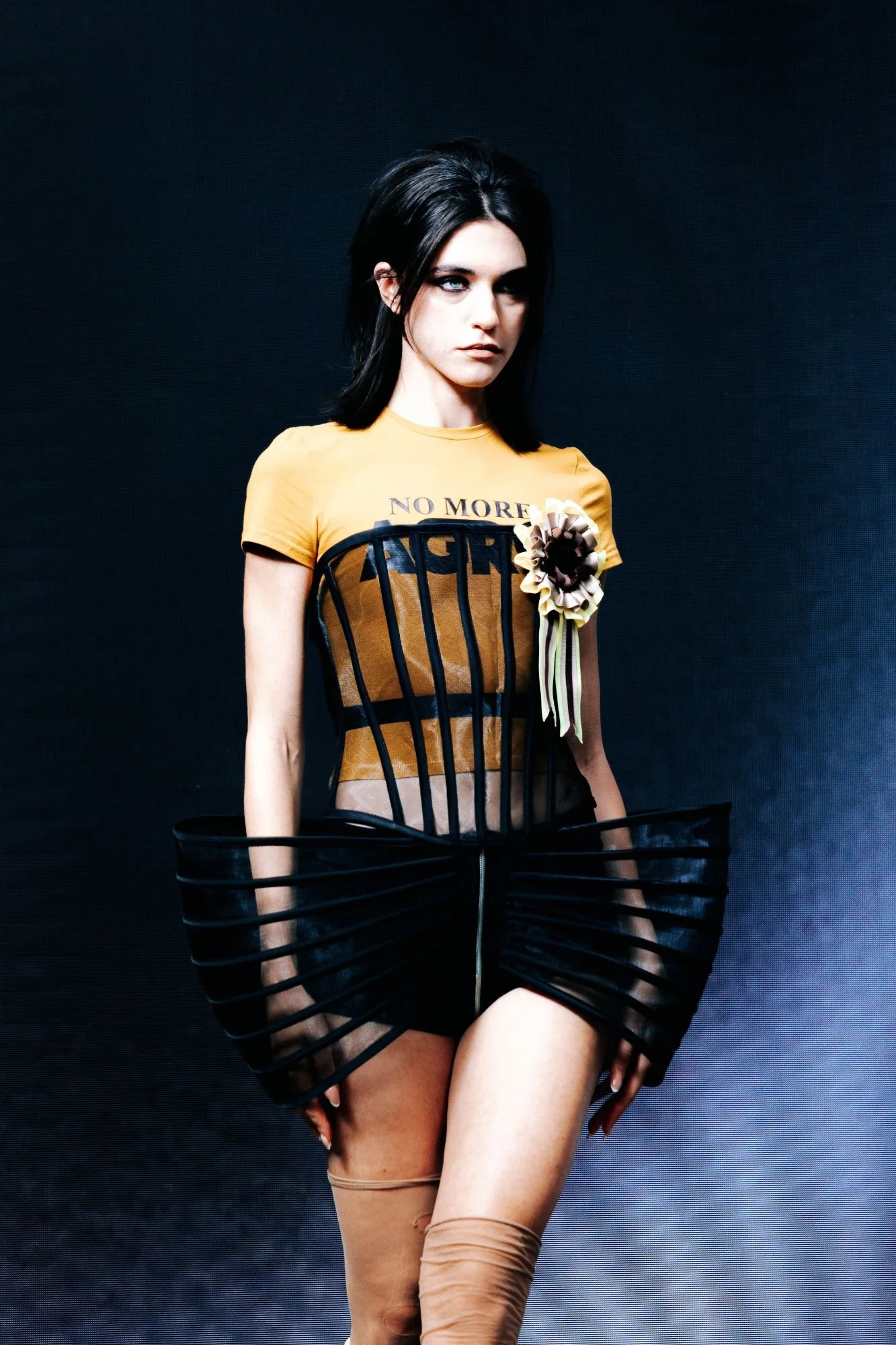
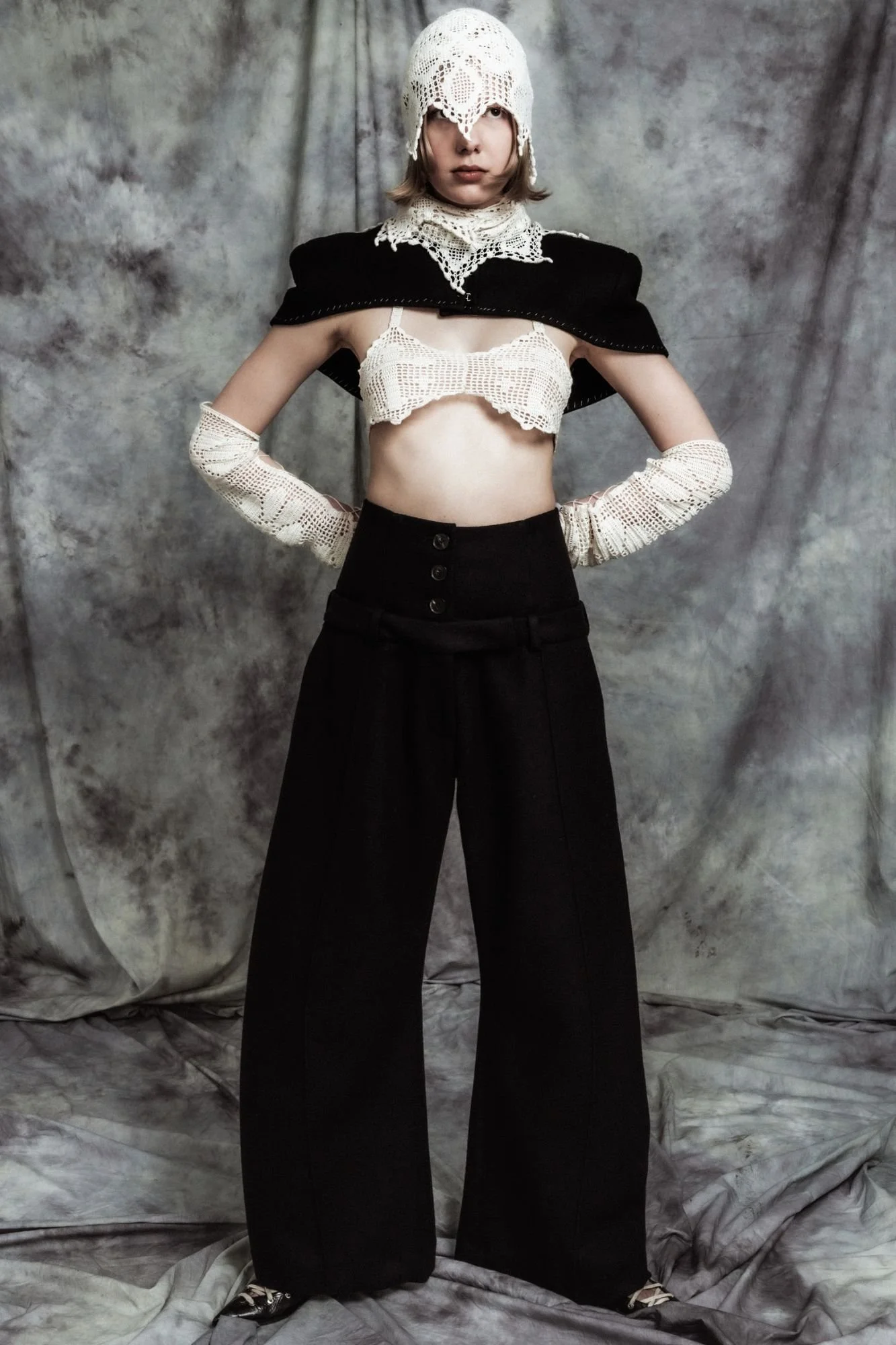
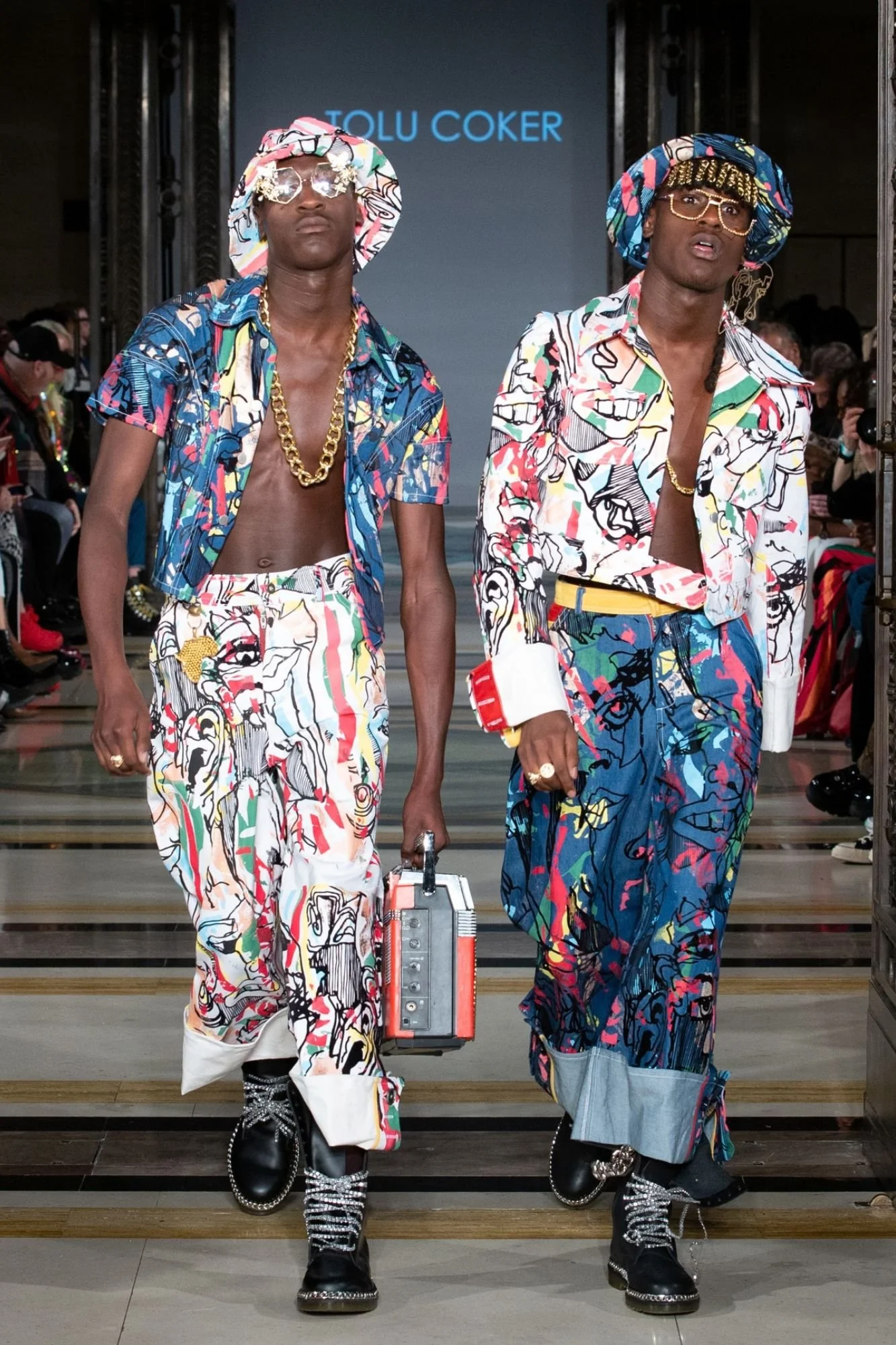
We sat down with Martyn Roberts, Founder and Creative Director, and Biljana Poposka-Roberts, Managing Director, to get their perspective on twenty years of Fashion Scout.
1. What is the origin of Fashion Scout and how did it begin?
Fashion Scout began in London in 2006, at a moment when the creative energy around London Fashion Week was extraordinary. There was huge demand to show in London, not only from emerging British designers but from established and international designers who wanted to be part of that energy. What we recognised was a gap in access.
Our first season was in a car park close to the Natural History Museum, where London Fashion Week was based at the time. Soon afterwards we found a home at Baden-Powell House in South Kensington, named after Robert Baden-Powell, founder of the Scout Movement. It’s a little-known part of our story, but that is where the Fashion Scout name originated - a reference to our home at the time that also happened to describe rather perfectly what we were becoming: scouting fashion talent.
The original idea wasn’t specifically to create a platform for emerging talent. It was about access. Producing an independent catwalk show required a designer to find a venue, production team, models, hair and make-up, technical support and all the infrastructure around it. We saw an opportunity to bring those elements together and professionally produce the entire experience. Designers could come to us with a collection and creative vision, and we could provide the infrastructure around them to bring that vision to the catwalk.
That attracted designers at very different stages of their careers and international brands wanting to be part of the energy surrounding London Fashion Week. Over time, discovering and supporting emerging talent became one of the things Fashion Scout was particularly recognised for, and programmes such as Ones To Watch grew from that.
But access has always been fundamental to what we do.
2. Which designers or brands that you have featured are you most proud of ?
It’s almost impossible to choose, because after twenty years there are so many different definitions of success.
Of course, there are designers we encountered very early whose careers went on to become internationally significant. Iris van Herpen and David Koma immediately come to mind, alongside Eudon Choi and Phoebe English.
What I remember about designers such as Iris and David is that there was already a very particular creative language. David had an extraordinary understanding of the body and silhouette, while Iris was bringing craftsmanship, technology and experimentation together in a way that felt genuinely new. You couldn’t necessarily predict where their careers would go, but you could recognise that there was something distinctive there.
Sometimes you encounter a designer before the wider industry knows what they might become. Years later, you realise you witnessed one of the earliest chapters of a much bigger story.
But I’m equally proud of designers who may not have become globally recognised names, but who have built successful businesses, become important creative voices within their own countries or created careers on their own terms. Success in fashion shouldn’t have only one definition.
For me, it was never about being able to say, “we discovered this famous designer”. It’s about recognising potential at a moment when somebody needs other people to believe in it too.
3. Why is Fashion Scout important for fashion culture ?
Because fashion culture needs independent spaces where something can exist before the wider industry has decided that it matters.
The established fashion system is very good at amplifying success, but every important creative career has a period before that recognition - when the idea may still be raw, the business unresolved and the designer largely unknown.
That is the space Fashion Scout has occupied. We create a professional environment where designers can put their work in front of press, buyers, stylists, photographers and the wider industry, sometimes for the first time.
Independent platforms are important because the criteria cannot simply be existing visibility or commercial scale. Fashion needs places willing to take a chance on something unfamiliar, and designers need opportunities to test ideas, build relationships and begin creating an audience around their work.
If every platform waits until somebody is proven, where does the proving happen?
Fashion culture moves forward because somebody creates space for the unfamiliar to be seen.
4. What advice would you give to emerging fashion designers ?
Develop a point of view before you become too concerned with developing the appearance of a brand.
Young designers today are under enormous pressure to have everything immediately - the perfect campaign, social media, collaborations, stockists, content and all the visual signals of an established label. But you can become incredibly busy constructing the appearance of a brand before you’ve understood what makes you distinctive.
I’d rather see somebody pursue one extraordinary idea with conviction than ten ideas designed to satisfy ten different audiences.
At the same time, creative conviction alone isn’t enough. The paradox is that protecting your creative independence today requires greater business intelligence than ever. Designers need the commercial understanding and structure to turn creativity into a sustainable business, while having the confidence not to let short-term commercial pressures dictate their creative direction.
And one thing twenty years of Fashion Scout has taught me is that showcasing is only the beginning.
After every Fashion Week, we see a real difference between the designers who actively build on the opportunity and those who expect the show itself to do the work. Some designers immediately follow up with press, stay in contact with the stylists, photographers, hair and make-up teams and other creatives they’ve met, organise shoots, create content, communicate with the industry and keep sharing the collection long after the catwalk has finished.
They understand that every person they meet can become part of a much wider creative network. A photographer might lead to an editorial, a stylist to another collaboration, a press introduction to something six months later. Not every connection produces an immediate result, but careers are often built through the accumulation of those relationships.
Designers have to be active participants in creating their own momentum.
A catwalk can give you a moment of visibility, but you have to turn that moment into momentum. Stay curious, follow up, collaborate, communicate and remain present. Opportunity rarely finishes where it begins.
5. Twenty years is a remarkable achievement. What does the future hold for Fashion Scout ?
The last thing we wanted our twentieth anniversary to become was simply a retrospective. I’m incredibly proud of the history, but the most appropriate way to celebrate twenty years of Fashion Scout is to invest our energy in what comes next.
Our anniversary season reflects that. We presented our largest Ones To Watch programme to date across three catwalks, alongside individual shows, international collaborations and the Beyond Limits: Polish Visionaries exhibition.
Beyond London, we’ve spent the past five years developing Fashion Scout Armenia, and more recently travelled to Ethiopia and Zimbabwe through the Creative DNA programme. Experiences like these continually expose us to different cultures, craft traditions and perspectives on what contemporary fashion can be.
London Fashion Week remains at the heart of Fashion Scout, but our outlook has become increasingly international. The more countries we work in, the more we’re reminded that extraordinary creative talent can emerge anywhere.
Talent has never belonged exclusively to the established fashion capitals. Opportunity and visibility have.
For the future, I want Fashion Scout to continue being a place where those connections can happen - between new creative voices and London, between different cultures and markets, and between designers and an international fashion industry that might otherwise never encounter their work.
Twenty years has made us proud of what we’ve built, but it hasn’t made us nostalgic. If anything, we’re more curious about what’s next.
Twenty years ago we created a platform. The exciting question now is where that platform can take us next.
Breakdown of events at London fashion week SS27
Ones to Watch Edition 1:
Edition 01 introduced eight designers moving between sculptural couture, British tailoring, 3D fabrication and cultural storytelling: Adolf Maldonado, C.PROTOCOL, CHATCHAI C., Christine Elizabeth, ENNY, JINSEO, Leila Daniele and MAD DAISY. Following his Ones To Watch debut in February, Adolf Maldonado returned with growing international momentum after Forbes praised his sculptural menswear as having "wowed the crowd". C.PROTOCOL merges 3D printing and digital modelling with avant-garde materials and wearable sculpture, while CHATCHAI C, shaped by Savile Row and Givenchy, paired disciplined British tailoring with modern material innovation.
Ones to Watch Edition 2:
Edition 02 saw eight designers reworking heritage, identity and craft for a contemporary audience: ACIDSIIIA, GAMI LEW, LABEL ASTHA GARG, SANJANA GHOSH, SERINA LEE, SHUWEN SONG / SONG SONG, STYLEDBYZK and TYLER VON GREENSTON. Kyiv-born Anastasiia Pozhydaeva of ACIDSIIIA, featured in Dazed, reinterprets Ukrainian craft through sculptural womenswear. Serina Lee, winner of the Harper's BAZAAR Asia NewGen Fashion Award, brings Chinese ink painting into dialogue with digital technologies. Lagos-based STYLEDBYZK transforms Aso-oke and Adire into versatile pieces for the modern woman, while Tyler Von Greenston, a UK semi-finalist for the R|Elan Circular Design Challenge, reconsiders British tailoring through zero-waste principles.
Haus of McLees present RENATUS:
Saturday 19 September also saw Haus of McLees present its new collection, RENATUS (Latin for 'reborn'), exploring the psychological and spiritual journey through darkness towards light. Founded by Swiss and Native American designer Mclees Mantegazza, the house draws on traditional Shoshone beadwork, sculptural silhouettes and one-of-one pieces. Previously highlighted by Forbes and Vanity Fair, with pieces worn by Shakira and Bombay Mami, Haus of McLees now operates from a Notting Hill atelier. The collection uses a restrained palette of black, white, silver and gold, with intricate hand-beading, recycled materials and semi-precious stones, all handcrafted by the brand's small team. Haus of McLees will go on to show during Paris Fashion Week in October.
Beyond Limits: Polish Visionaries:
Running across three days, BEYOND LIMITS brought twelve of Poland's most distinctive fashion and jewellery talents to London as part of the official Fashion Scout programme. The three-day exhibition features eight fashion designers: Hubert Pelc, Martyna Konieczny (No Przesada), Robert Czerwik, RAD DUET, Katarzyna Konieczka, Michał Szulc, KARDASJAN and Tomasz Armada, alongside four jewellery designers: Radek Anais Laró, Rzucidło, Anna Samków and Stettin Jewellery. United not by a single aesthetic but by an uncompromising approach to craftsmanship and individual expression, the group demonstrates the strength of a Polish creative scene that is increasingly ambitious and outward-looking. GQ Poland was the exclusive media partner.
FJU Talents:
FJU Talents returned to Fashion Scout marking its tenth anniversary with a showcase of four new Taiwanese designers; Min-Hsin Yu, YUI Kao, Alison Lai and Ting Hsuan Chang, alongside selected work from designers who have featured across the past decade. Presented by the Department of Textiles and Clothing at Fu Jen Catholic University, the platform has spent ten years giving emerging Taiwanese designers an international stage at London Fashion Week.
Fashion scout Social: Website - Instagram - X
Martyn Roberts: Instagram
Biljana Poposka-Roberts: Linkedin
